Milk Bottle Caries and Management

Gordon Tam • November 5, 2025

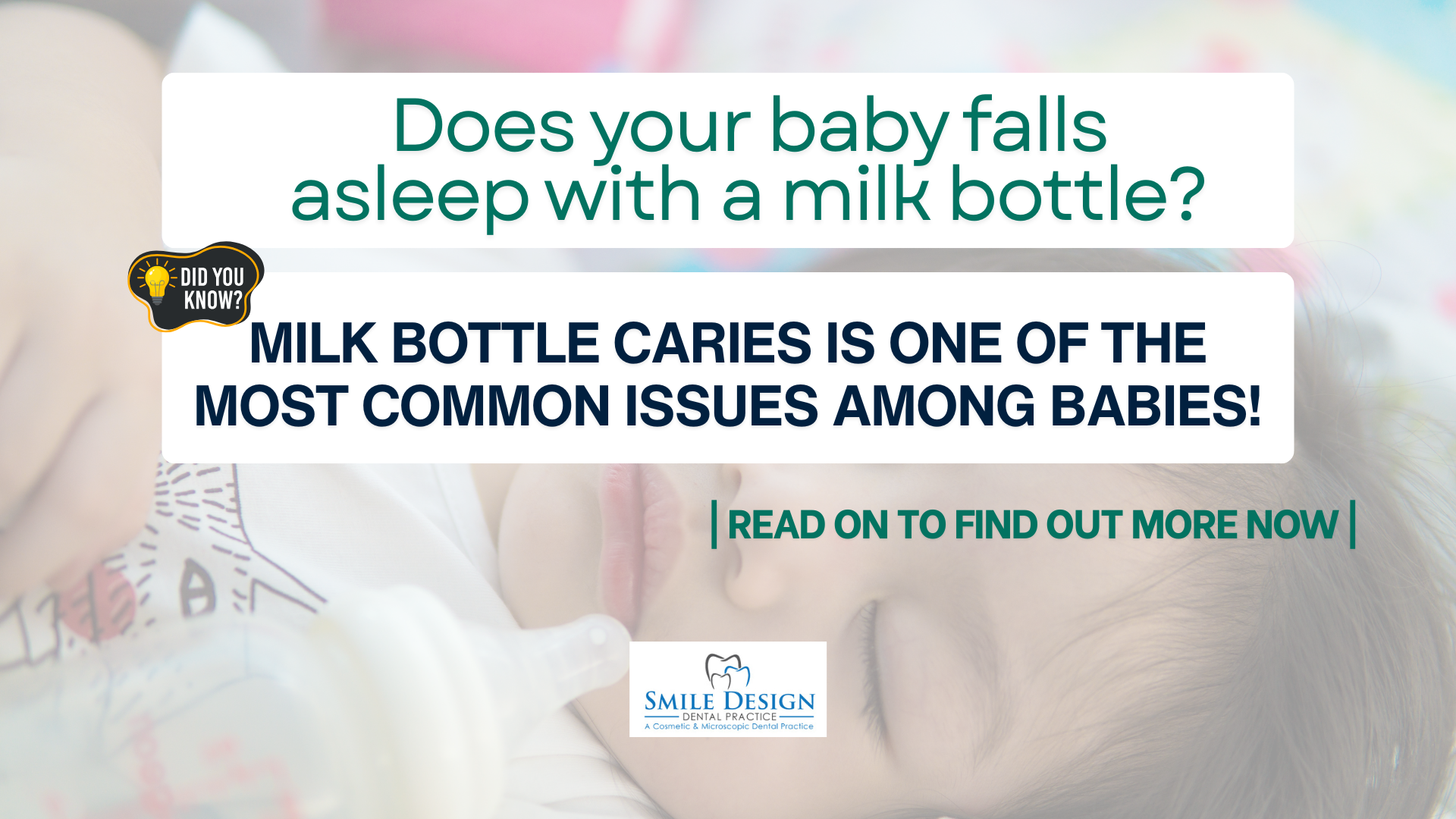
Did you know that even baby teeth can get cavities? “Milk bottle caries,” also known as baby bottle tooth decay, is a common dental problem that affects many young children. It usually happens when babies fall asleep with a bottle of milk or sweetened drinks. The good news is — it’s completely preventable with the proper care and habits!
What Is Milk Bottle Caries?

Milk bottle caries happens when a child’s teeth are exposed to sugary liquids too often or too long. This includes milk, formula, fruit juice, or sweetened drinks. When these sugars stay on the teeth, bacteria in the mouth turn them into acid, slowly attacking and weakening the tooth surface.

The decay often starts on the upper front teeth but can spread to other teeth if left untreated. It can cause pain, infection, and difficulty eating, which can affect how the adult teeth grow later.

What Causes Milk Bottle Caries?

- Sleeping with a Milk Bottle

  • When a baby falls asleep with a bottle, the milk or juice stays in the mouth for hours, allowing sugar and bacteria to damage the teeth.

- Frequent or Prolonged Bottle Feeding

  • Constant sipping or bottle use beyond 12–18 months increases the chance of cavities.

- Sweet Drinks and Snacks

  • Juices, sweetened milk, and sugary snacks add more sugar for bacteria to feed on.

- Poor Cleaning Habits

  • Not cleaning your baby’s teeth or gums after feeding allows plaque and bacteria to build up.

- Sharing Bacteria

  • Using the same spoon or cleaning a pacifier with your mouth can transfer cavity-causing bacteria to your baby.

How to Prevent Milk Bottle Caries

 Don’t let your baby sleep with a bottle.

  • If your child needs comfort at bedtime, use plain water instead of milk or juice.

 Start cleaning early

  • Before teeth appear, gently wipe your baby’s gums with a soft, damp cloth.
  • Once teeth come in, brush twice daily with a tiny smear of fluoride toothpaste.

 Wean off the bottle by 12 months.

  • Please encourage your child to drink from a cup instead of a bottle after their first birthday.

 Limit sugary drinks and snacks

  • Choose water or plain milk between meals and avoid constant snacking.

 Visit the dentist early

  • Schedule your child’s first dental visit by age one or within six months of their first tooth.
  • Regular check-ups help catch early signs of decay and keep your child’s teeth strong and healthy.

How Is Milk Bottle Caries Treated?

If your child has early signs of decay, don’t worry — your dentist can help!

  • Early decay can often be stopped with fluoride treatments.
  • More advanced decay may need fillings or crowns to repair damaged teeth.
  • Severe pain or infection may require the removal of the affected tooth.

Your dentist will also guide you on better feeding habits and brushing routines to prevent future problems.

In Summary

Healthy baby teeth are essential for chewing, speech, and guiding adult teeth into place. With simple steps — like cleaning early, avoiding bedtime bottles, and seeing your dentist regularly — you can keep your little one’s smile bright and cavity-free!


Schedule an appointment with us NOW! Call us at 6463 8588 or WhatsApp to 9815 5336

To serve you better, we are available by 
Appointment Only

Please contact us to schedule an appointment.
By Gordon Tam December 16, 2025
Fresh breath is more than just a social nicety—it’s essential to oral health and personal confidence. Whether you’re heading into a meeting, going on a date, or want to feel your best, maintaining fresh breath throughout the day requires a combination of good habits and awareness. Here’s everything you need to know about keeping your breath consistently fresh.
By Gordon Tam December 10, 2025
Gaps between teeth, medically known as diastema, are more than a cosmetic concern for many people. These spaces can trap food particles, increase gum disease risk, and affect oral health and self-confidence. Fortunately, modern dentistry offers several effective options to address these gaps, ranging from conservative approaches to more comprehensive treatments. 
By Gordon Tam November 28, 2025
Teeth grinding, clinically known as bruxism, affects millions of people worldwide. It often occurs unconsciously during sleep. This repetitive clenching and grinding can lead to significant dental damage and contribute to temporomandibular joint disorders (TMD). Fortunately, dental professionals have developed effective protective devices—night guards and occlusal splints—to combat these issues.
By Gordon Tam November 22, 2025
Waking up with a sore jaw, headaches, or sensitive teeth can be frustrating — and surprisingly common. One of the leading causes is teeth grinding and clenching, also known as bruxism, which often happens while you sleep.
By Gordon Tam November 10, 2025
Tooth decay is one of the most common dental problems among children — but the great news is, it’s almost entirely preventable. Building good dental habits early helps your child maintain a healthy, confident smile and prevents painful cavities and costly treatments later. Here’s what every parent should know to keep those little teeth strong and healthy.
By Gordon Tam October 24, 2025
The Next Level of Teeth Whitening A radiant, confident smile starts with healthy, luminous teeth. While surface stains from coffee, tea, or ageing are common, not all whitening treatments are created equal. Microscopic dentistry takes professional teeth whitening to the next level — combining advanced technology with precision and enamel-safe care for remarkable results.
By Gordon Tam October 15, 2025
A radiant smile is more than just white teeth — it reflects precision, care, and health. Yet even with the best brushing habits, many people notice gradual discolouration that dulls their smile over time. At our clinic, we approach teeth discolouration through the lens of microscopic and aesthetic dentistry. We uncover the root cause of stains with magnified accuracy and offer targeted treatments for lasting brightness.
By Gordon Tam October 3, 2025
Modern crowns made from zirconia oxide look and feel like real teeth, with strength that lasts 10–15 years. At our clinic, crowns are often crafted and fitted on the same day, enhanced in our in-house lab for natural beauty. Using an operating microscope, we ensure a precise fit and a bite that feels just right. It’s not just a crown—it’s a long-term investment in your smile, comfort, and confidence. When it comes to restoring a damaged or weakened tooth, a dental crown is often the best long-term solution. But not all crowns are created equal. Advances in modern dentistry now allow patients to enjoy crowns that are stronger, more natural-looking, and fitted with precision. Here’s why choosing a high-quality dental crown is an investment in both health and confidence.
By Gordon Tam September 23, 2025
How It Helps You Get Safer and Better Dental Treatment If you’ve ever had a filling or a root canal, you may have noticed your dentist placing a small sheet over your mouth, leaving only the tooth being worked on exposed. This is called a rubber dam, and while it may look unusual at first, it’s an essential part of modern dental care. Think of it as a protective shield that makes your treatment safer, cleaner, and more comfortable.
By Gordon Tam September 15, 2025
When people hear “root canal,” they often think of pain and extended dental visits. In reality, root canal treatment today is nothing like its old reputation. With the help of advanced dental technology, the procedure is now safer, more precise, and more comfortable than ever before. In fact, it is one of the most reliable ways to save a natural tooth.
Show More