What is Happening to My Tooth with a Sudden Sharp Pain on Bite?
Sharp Pain When Biting? You Could Have a Cracked Tooth
Have you ever been enjoying a meal when you suddenly feel a sharp pain in your tooth? You instinctively switch to chewing on the other side of your mouth, hoping that the discomfort will eventually go away.
You may even avoid certain foods or find yourself chewing more carefully without realising it.
A healthy tooth should allow you to bite and chew comfortably.
Pain during normal function is NOT NORMAL, even if it lasts only a few seconds or happens occasionally.
That sudden, sharp pain could be an early warning of a more serious dental problem. Delaying professional attention may allow the condition to worsen, making treatment more complicated and affecting our ability to preserve your natural tooth.
What Causes Sharp Pain When Biting?
There are several possible reasons why you may experience pain when biting or chewing:
- Cracked tooth – A fine crack within the tooth structure that causes pain when biting down or releasing your bite.
- Dental decay – A cavity that has progressed into the deeper layers of the tooth.
- Damaged dental restorations – Loose, fractured or deteriorating fillings and crowns.
- Uneven bite – Excessive biting pressure concentrated on a particular tooth.
- Gum disease – Inflammation or loss of the supporting structures around the tooth.
- Tooth infection – Inflammation or infection within the tooth or around its root.
- Teeth grinding and clenching (bruxism) – Repeated excessive forces that place stress on the teeth and their supporting structures.
Among these conditions, a cracked tooth can be particularly challenging to diagnose and manage.
Could You Have a Cracked Tooth?
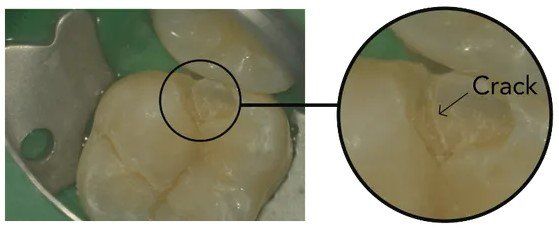
Not every cracked tooth is visibly broken. Some cracks are so fine that they are difficult to identify without high magnification.
You may experience a sharp pain when biting into certain foods, pain when releasing your bite, or increased sensitivity to cold drinks. Sometimes, you may not even be able to identify which tooth is causing the discomfort.
A cracked tooth can develop from biting on something hard, long-term teeth grinding, repeated biting pressure or weakened tooth structure following large dental restorations.
Unlike a fracture in our bones, a crack in a tooth does not heal by itself. Repeated chewing forces may cause the crack to extend deeper into the tooth, potentially affecting the nerve, root and surrounding tissues.
What could initially be managed with a conservative restoration may eventually require root canal treatment or, in more severe cases, extraction.
This is why we encourage early examination, even when the pain is still manageable.
How Do We Examine and Diagnose a Cracked Tooth?
At Smile Design Dental Practice, we understand how frustrating it can be to experience recurring dental pain without knowing exactly what is wrong. It can be even more concerning when you have had previous dental treatments, yet the discomfort persists.
We begin by listening to you. When did the pain start? Does it hurt when you bite down or when you release your bite? Is there sensitivity to temperature? Does the pain linger?
These details provide important clues for our diagnosis.
Depending on your symptoms and clinical findings, we may carry out a series of examinations and diagnostic tests:
- Detailed tooth-by-tooth examination – To assess the tooth, existing restorations and surrounding gum tissues.
- High-definition intraoral photography – To document the tooth condition and help you visualise our findings.
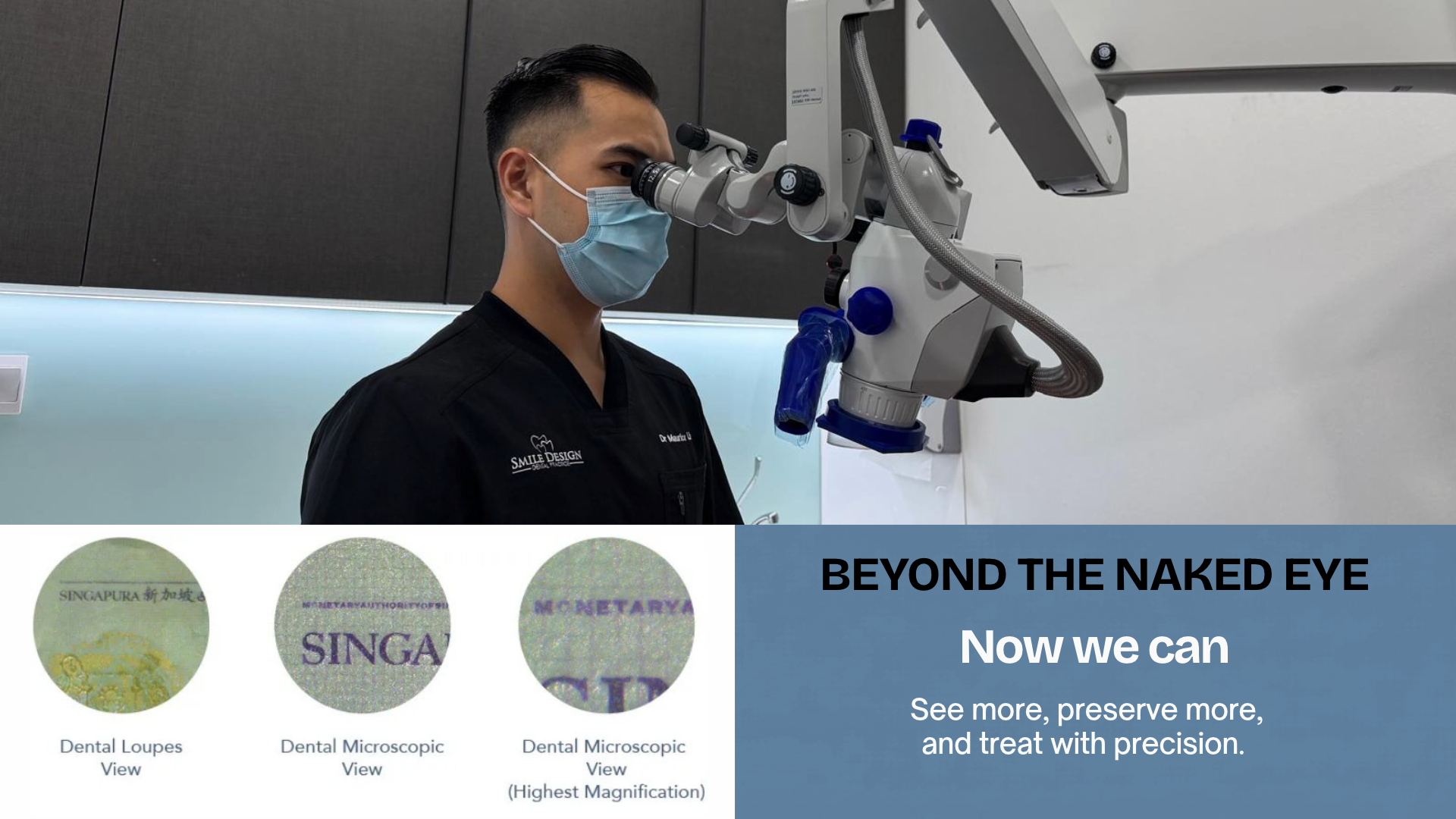
- Dental operating microscope examination – To identify fine cracks and examine the visible extent of the crack under high magnification and illumination.
- Bite test – To help locate the affected tooth and identify which part of the tooth triggers the pain.
- Transillumination test – Using light to help identify cracks within the tooth structure.
- Pulp sensibility testing – To assess how the nerve within the tooth responds to stimulation.
- Periodontal assessment – To examine the supporting gum tissues and look for signs that a crack may extend beneath the gum line.
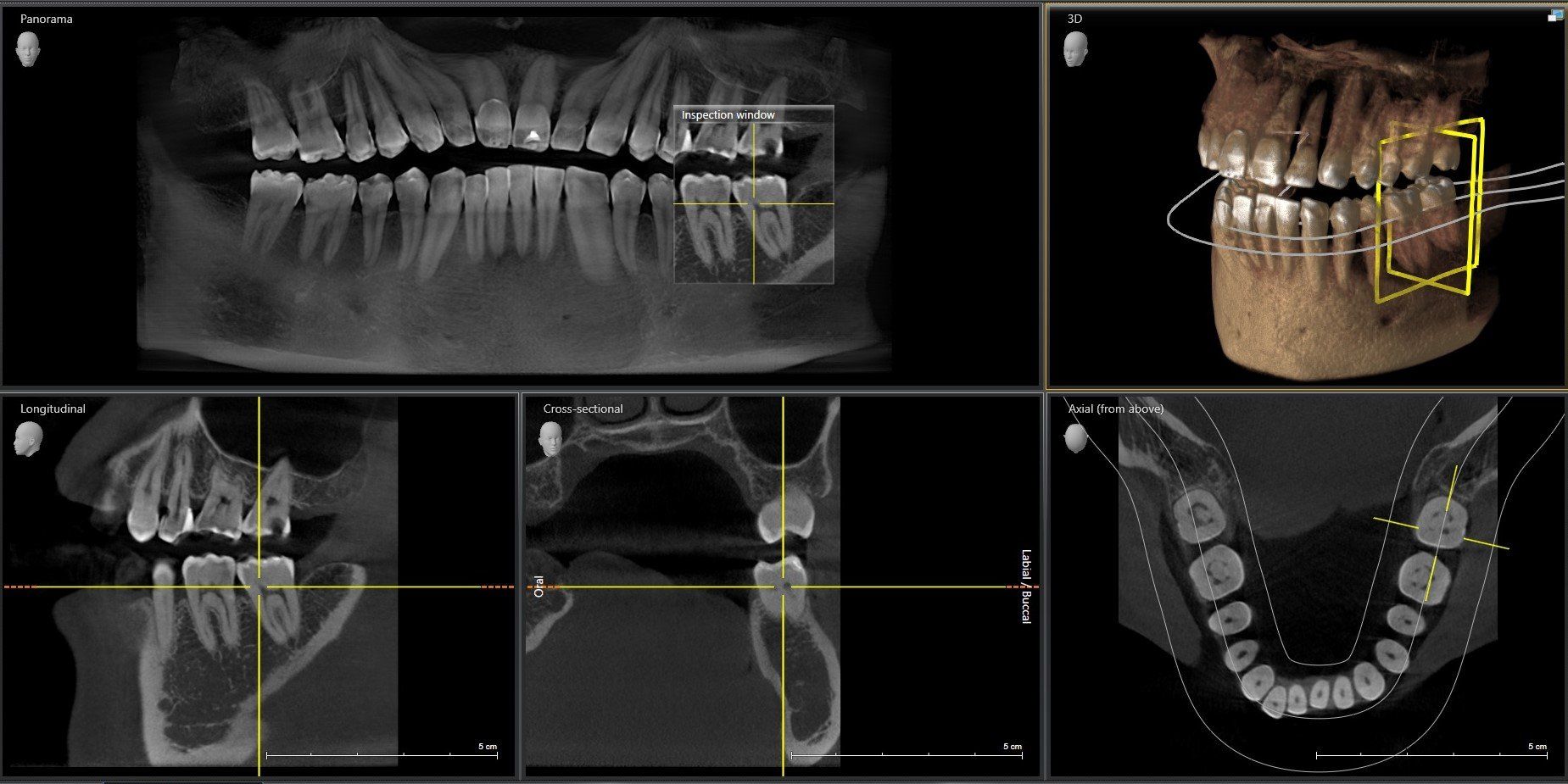
- Digital X-ray radiographs and Cone Beam CT (CBCT), where indicated – To assess the roots, surrounding bone and signs of inflammation or infection.
Fine cracks may not be visible on X-rays or even CBCT scans. This is where the combination of microscopic examination, clinical tests and your symptoms becomes important.

You cannot treat what you cannot see.
Every treatment room in our clinic is equipped with a dental operating microscope. Seeing finer details helps us understand your tooth condition and determine how much of your natural tooth structure we can preserve.
Can a Cracked Tooth Be Saved?
Not every cracked tooth requires a crown, root canal treatment or extraction.
Treatment depends on the location and extent of the crack, the amount of remaining healthy tooth structure, and the condition of the nerve and supporting tissues.
Possible treatment options include:
- Monitoring – For superficial, asymptomatic craze lines that do not compromise the tooth structure.
- Conservative dental restoration – To restore and protect the tooth where appropriate.
- Ceramic onlay or dental crown – To protect the weakened tooth and limit movement of the cracked segments during chewing.
- Root canal treatment followed by a protective restoration – When the nerve is irreversibly inflamed or infected, and the tooth remains restorable.
- Extraction and tooth replacement – When the crack is too extensive for the tooth to be predictably restored.
- Customised occlusal splint (night guard) – When teeth grinding or clenching contributes to excessive forces, to help manage excessive forces and protect the teeth.
Our philosophy is to preserve as much of your natural tooth as possible, whenever clinically feasible, without compromising its long-term health and function.
Why Cracked Tooth Treatment Can Be Complex
One challenge of managing a cracked tooth is that the full extent of the crack may not be known during the initial examination.
We understand that uncertainty can be unsettling, especially when you are already experiencing pain and are concerned about the treatment fees, time involved and whether your tooth can be saved.
This is why comprehensive treatment planning is an important part of our approach.
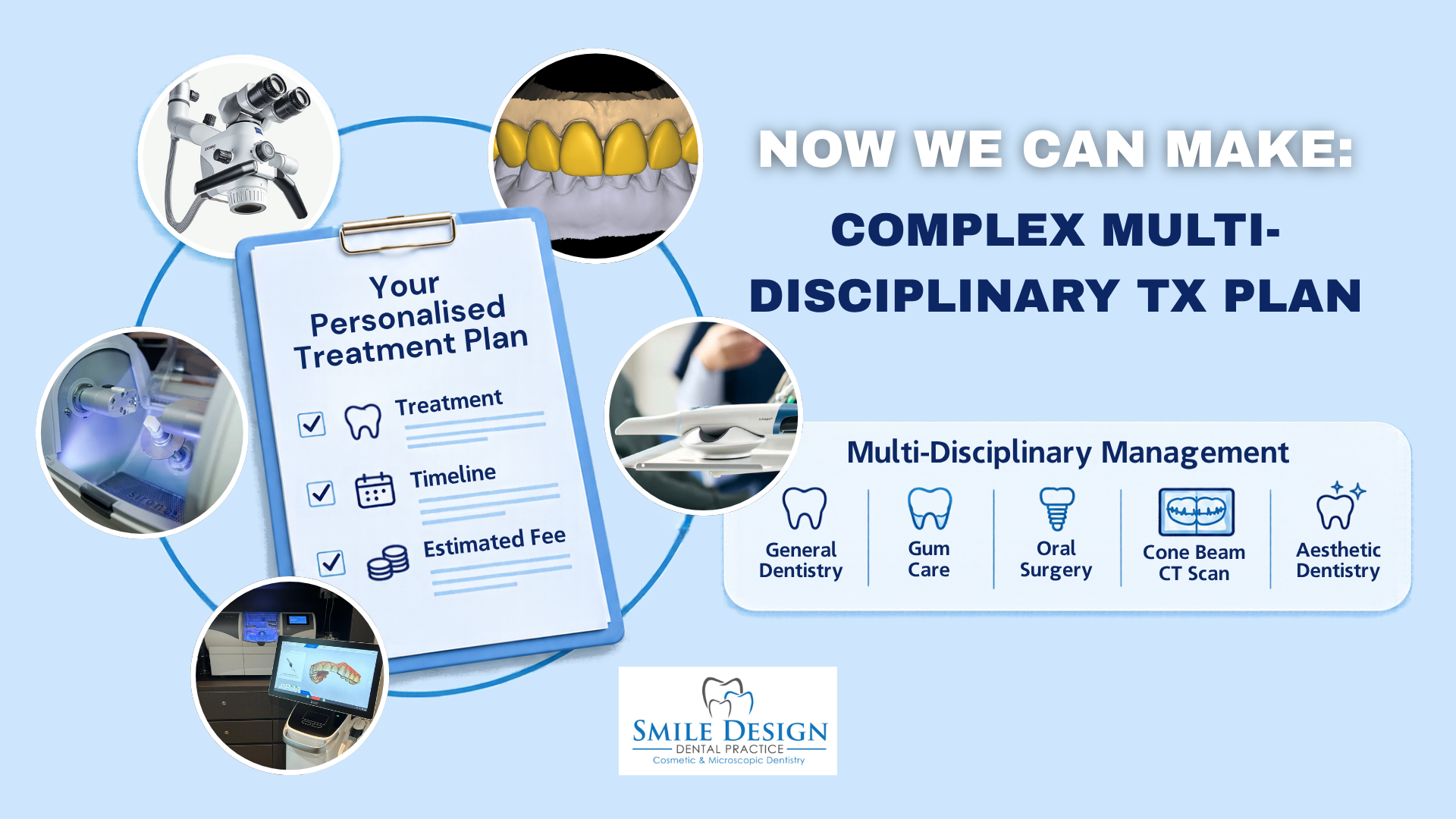
Before commencing treatment, we will discuss with you:
- Our clinical findings and current understanding of your tooth condition.
- The possible treatment options and their limitations.
- Different scenarios that may arise during treatment.
- The anticipated treatment outcomes and long-term prognosis.
- The estimated treatment fees and time required for each possible scenario.
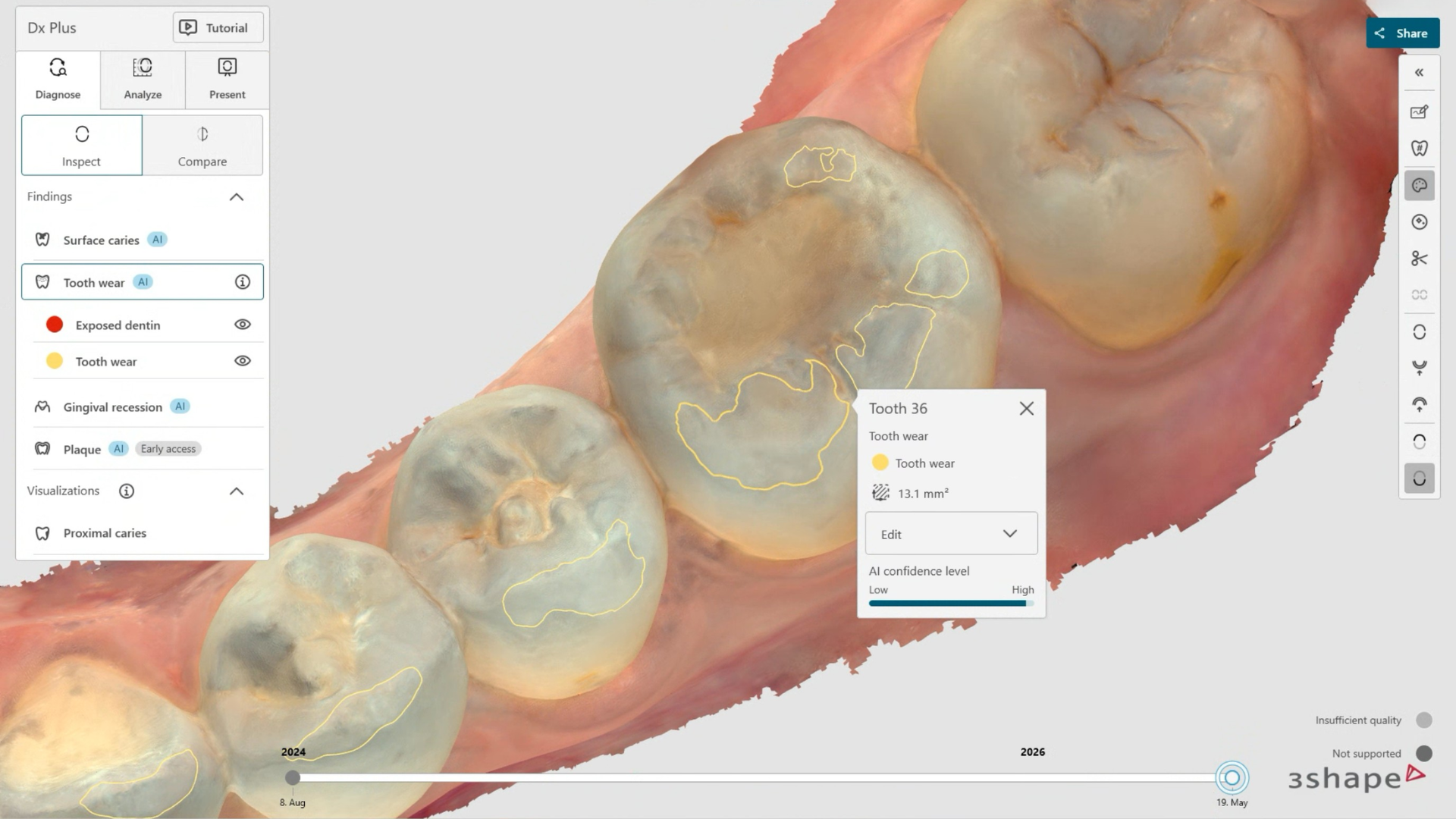
For more complex cases, we may also seek input from clinicians across different dental disciplines to determine whether the tooth can be retained and how it can be managed.
Should new findings arise during treatment, we will explain them to you with microscopic photographs where possible, discuss revised treatment options, and obtain your approval before proceeding.
We want you to understand not only what we propose to do, but also why we are doing it.
Early Intervention Could Make a Difference
We all have busy schedules, and it is understandable that visiting the dentist may not always be your immediate priority, especially when the pain comes and goes.
However, the absence of pain does not necessarily mean that the problem has been resolved.
Early intervention may allow us to manage the condition more conservatively, preserve more of your natural tooth structure and reduce the need for extensive treatment. It could also mean less discomfort, fewer dental visits and lower treatment costs.
At Smile Design Dental Practice, we believe in doing it once and doing it well. That begins with taking the time to understand the problem before deciding how to treat it.
Don't Ignore What Your Teeth Are Telling You
You should not have to think twice before biting into your favourite food, worry about which side of your mouth to chew on, or live with the uncertainty of when the next sharp pain might occur.
If you are experiencing pain when biting, do not hesitate to seek professional dental attention. Avoid chewing on the affected tooth until it has been assessed. If you experience severe pain, facial swelling or fever, seek urgent care.
Don't wait until the pain becomes unbearable or the tooth breaks.
The earlier we understand your tooth condition, the more options we may have to preserve your natural tooth.