Now We Can Measure & Monitor: A Smarter Approach to Dental Checkups
Your health checkup has a report card. Shouldn't your dental checkup have one too?
When you go for a medical health screening, you receive a report showing important measurements — blood pressure, cholesterol, blood sugar levels and other health indicators.
These numbers help you understand where your health stands, whether your results fall within acceptable ranges, and how they have changed compared to previous years.
More importantly, they allow you and your doctor to identify potential concerns early, sometimes long before any symptoms appear.
But what about your teeth and gums?
We know that teeth wear down over time and gums can gradually recede. Yet, unlike blood pressure or cholesterol, these changes have traditionally been difficult to measure and compare objectively during routine dental checkups.
At Smile Design Dental Practice, we believe that caring for your oral health should be just as proactive, informed and measurable as caring for the rest of your body.
And now, with advancements in digital dentistry, we can do more than simply observe.
Now, we can measure and monitor.
1. From What We See to What We Can Measure
For many years, dentists have relied on clinical examinations, photographs, X-rays, treatment notes and previous records to monitor changes in patients' oral health.
These remain essential diagnostic tools. However, subtle changes such as gradual tooth wear and gum recession can be difficult to quantify consistently, especially when they occur over months or years.
A tooth may look slightly shorter, or a gum margin may appear to have receded. But how much has it changed? Is the condition stable, or is it progressing?
Without comparable measurements, answering these questions can be challenging.
Today, with our
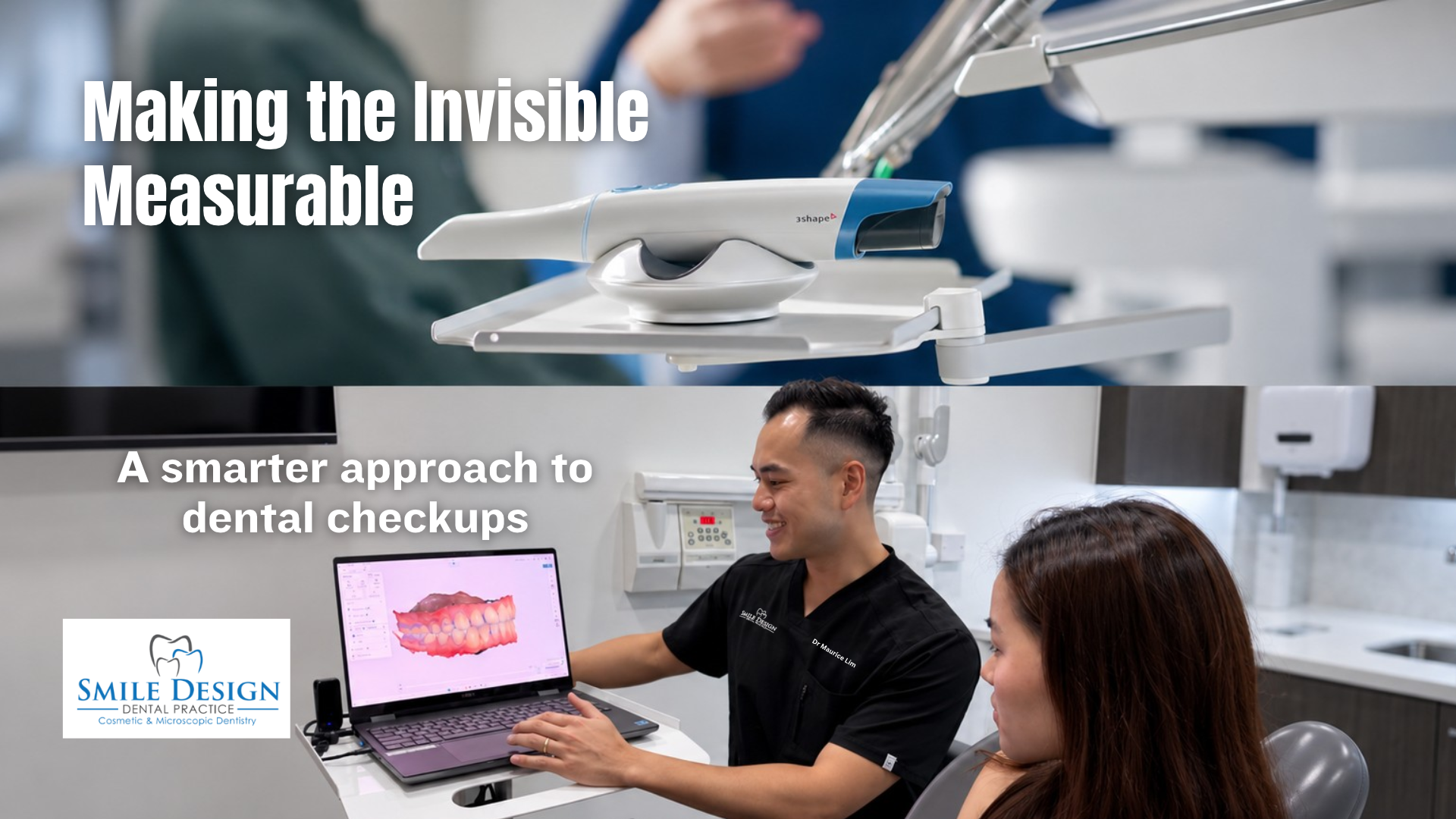
3Shape TRIOS 6 intraoral scanner and AI-assisted monitoring technology, we can create detailed 3D digital records of your teeth and gums.
By comparing scans taken at different appointments, we can identify and, where supported, measure changes in tooth surfaces and gum contours over time.
This transforms your dental records from individual snapshots into a more meaningful history of your oral health.
2. Your Oral Health Has Its Own Report Card
Imagine being able to review the condition of your teeth and gums in much the same way you review your annual health screening results.
Instead of simply being told that your teeth are wearing down or your gums are receding, you can see visual comparisons supported by digital measurements.
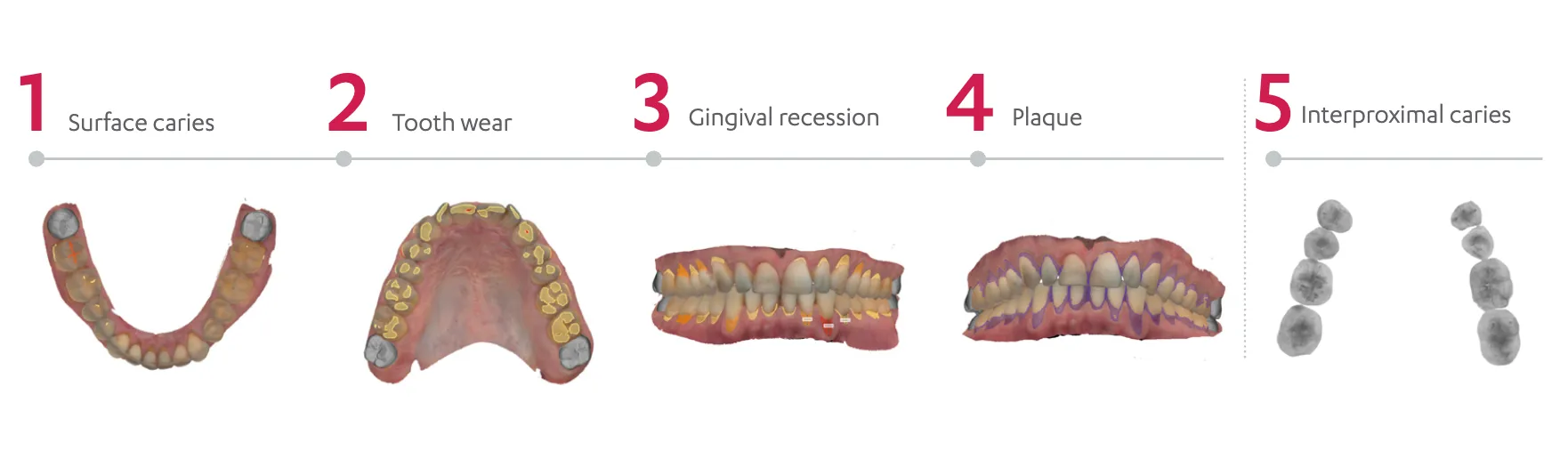
Tooth Wear: How Much Has Changed?
Teeth naturally experience wear over time. However, excessive grinding, clenching, acidic exposure and other factors can accelerate the loss of tooth structure.
With AI-assisted digital monitoring, we can compare scans to assess:
- Changes in tooth shape and biting surfaces.
- Progression of tooth wear and erosion.
- Areas experiencing greater structural changes.
- Whether previously identified wear is stable or progressing.
These findings help us decide whether preventive measures, continued monitoring or restorative treatment may be appropriate.
Gum Recession: Are Your Gums Staying Healthy?
Gum recession often develops gradually and may go unnoticed until tooth roots become exposed or sensitivity develops.
Digital monitoring allows us to compare gingival margins over time, helping us identify:
- Changes in gum position.
- Areas showing progressive recession.
- Stability following periodontal or orthodontic treatment.
- Areas that may require closer clinical assessment.
By combining digital comparisons with routine gum examinations, we can develop a clearer understanding of your periodontal health.
Just as a medical report helps you monitor changes in your health indicators, digital dental records help us track changes in your oral condition over time.
Unlike blood tests, however, not every dental measurement has a universal normal range. Our dentists interpret these changes according to your individual clinical condition, risk factors and treatment history.
3. Small Changes Today Can Make a Big Difference Tomorrow
One of the greatest advantages of measurable digital records is the ability to recognise deterioration before it becomes obvious.
A small amount of tooth wear or gum recession may not cause any discomfort today. However, if the condition continues to progress, it could eventually lead to sensitivity, structural damage or more complex treatment needs.
With regular digital monitoring, we can better distinguish between conditions that remain stable and those that require attention.
This supports our philosophy of
ultra-conservative dentistry — preserving as much natural tooth structure as possible and intervening only when clinically appropriate.
Sometimes, the best treatment is not to restore a tooth immediately, but to understand why it is deteriorating, introduce preventive measures and monitor the results.
Early awareness gives us more opportunities to act before a minor concern becomes a significant problem.
4. AI-Assisted Insights, Guided by Clinical Expertise
Technology does not replace the dentist. It enhances our ability to understand and communicate your oral health.
At Smile Design Dental Practice, we combine AI-assisted digital monitoring with detailed clinical examinations, dental operating microscopes, appropriate imaging and evidence-based protocols.
This allows us to develop a more comprehensive understanding of your condition and plan treatment with greater consideration for your long-term needs.
For patients requiring multidisciplinary care, these digital records can also support communication and coordinated planning across restorative dentistry, orthodontics, periodontal care and other treatments.
Our goal is not simply to collect more information, but to use that information meaningfully — helping you understand your condition, evaluate treatment options and make informed decisions with confidence.
5. Self-Care Is About Knowing, Not Guessing
We often associate self-care with exercise, nutrition, skincare and regular medical screenings. But oral health deserves the same attention. Taking care of yourself is not only about addressing problems when they arise. It is about understanding your body, recognising changes and making thoughtful decisions that protect your long-term well-being.
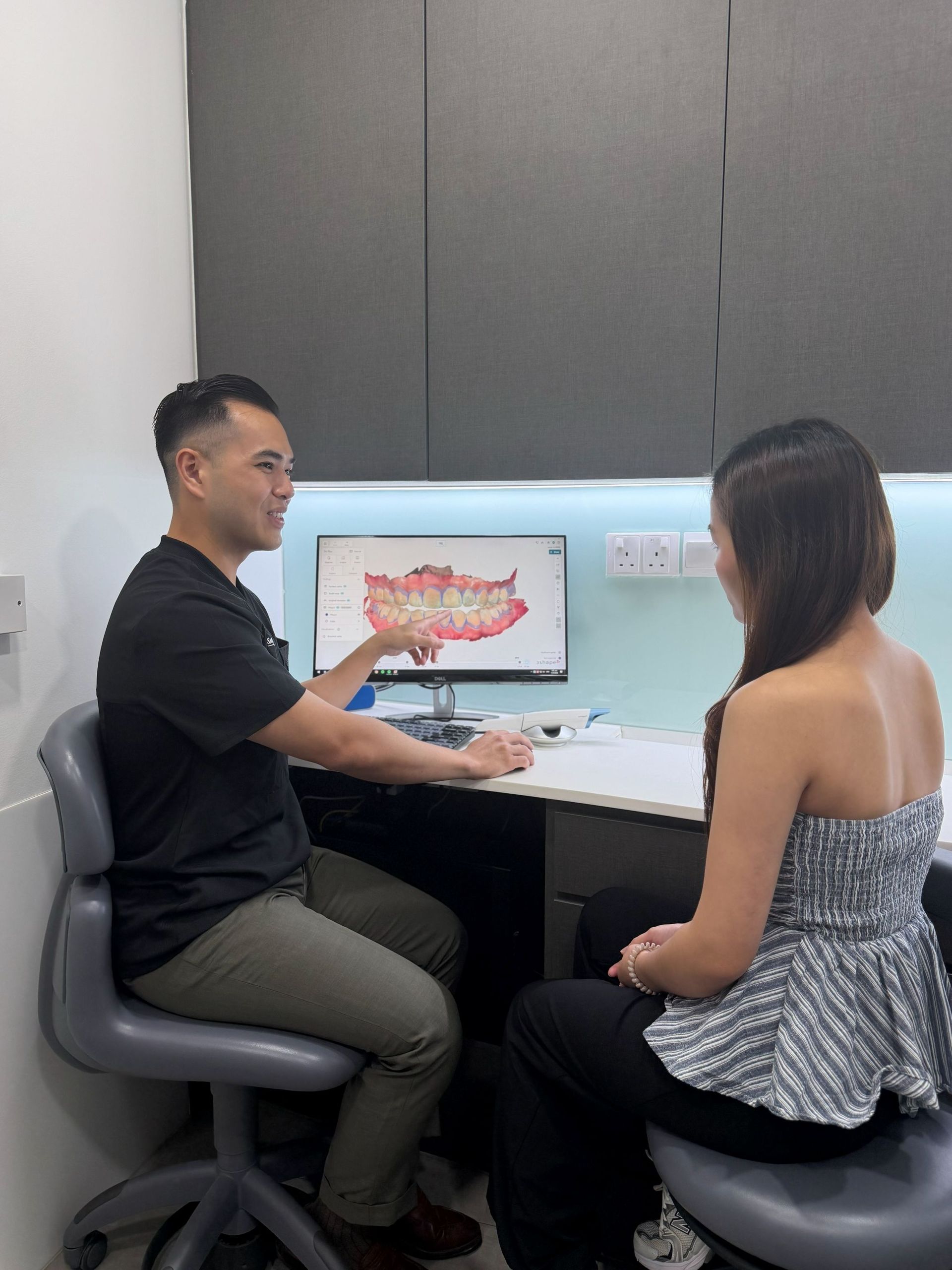
Your dental checkup should be part of that commitment. With digital monitoring, every routine visit becomes an opportunity to build upon your previous records, review your progress and understand how your teeth and gums are changing.
Because what we can measure, we can monitor. And what we can monitor, we can manage more proactively.
A More Informed Approach to Lifelong Oral Health
At Smile Design Dental Practice, we believe good dentistry begins with understanding.
By integrating the 3Shape TRIOS 6 scanner and AI-assisted monitoring into our preventive care, we aim to make your oral health more visible, measurable and easier to understand.
Not every change requires treatment. But every meaningful change deserves attention.
Our commitment is to help you recognise these changes early, make informed decisions and preserve your natural teeth for as long as possible.
Because self-care is not just about how you feel today. It is about taking care of your future self.
Schedule an appointment with us NOW! Call us at 6463 8588 or WhatsApp to 9815 5336
To serve you better, we are available by
Appointment Only.
Please contact us to schedule an appointment.